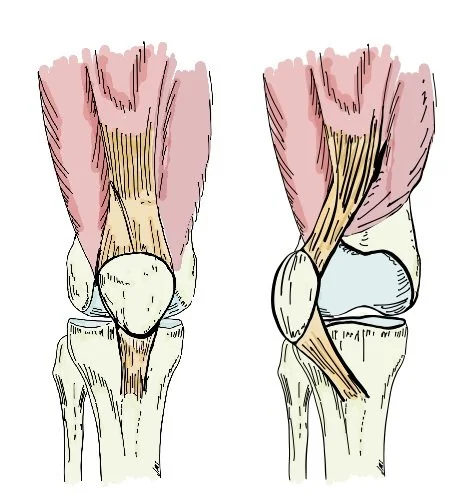
A knee dislocation is when the kneecap fully moves out of its normal position and does not return on its own. It is more severe than a subluxation and often requires immediate medical attention.
Symptoms
- Severe knee pain and inability to move the knee normally
- Visible deformity or kneecap clearly out of place
- Significant swelling
- Feeling of complete instability or “knee collapsing”
Common Causes
Knee dislocations usually happen from high-impact trauma, forceful twisting, or direct blows to the knee. They can also occur in people with severe ligament laxity or prior instability issues.
Why It Matters
A dislocation can damage cartilage, ligaments, and surrounding soft tissue. It also significantly increases the risk of future instability and chronic knee problems.
Treatment
- Emergency reduction (putting kneecap back into place)
- Physical therapy
- Bracing
- Ligament reconstruction surgery in severe cases
Key Takeaway
A knee dislocation is when the kneecap fully comes out of place and does not return on its own. It is a serious injury that often requires immediate treatment and can lead to long-term instability.